John Demetry is a critic. I consider him to be the world’s greatest critic.
I don’t know him in real life. We met on the X social media platform.
One day, in early 2026, I came across his review of the Hamnet movie.
Other critics were tepid and vapid. Most of them did not know enough about Shakespeare to see the movie for what it really was doing—deconstructing Shakespeare as a heroic Christian man, and endorsing witchcraft.
Demetry was honest and harsh. He did not pull any punches. He saw the movie for what it is—stridently “anti-Christian.”
I had read lots of reviews. Even most Christians who reviewed the film did not condemn it. They tried to make sense of it, and find something good to say about it.
Demetry did not make peace with this evil film—he defeated it with his incisive criticism.
As I read Demetry’s review, that was when I knew that he was the world’s greatest critic—because he was bravely fighting against a film to which most people had surrendered.
Another reason why he is such a great critic is because of how much he loves Michael Jackson. I do not often see any critic who actually roots for any celebrity, so I admire how much Demetry promotes Michael so enthusiastically. After watching the recent Michael biopic, I can see why Demetry says that it is the best movie of 2026 (so far).
Another reason why he is such a great critic is because of how he judges Christopher Nolan and James Gunn, for example. He thinks they are bad filmmakers. I agree with him—and I am thrilled that a critic like him actually speaks his mind.
I never see a critic really negatively criticize any filmmaker. I think this is a major problem. We need more fearless critics like Demetry, not less.
I think that cinema is not taken seriously enough in our world. Demetry takes it very seriously.
Not long after I first met him on X, Demetry read both of my novels.
To my great surprise, I discovered that he is precisely the kind of person I had written the books for—someone who had some knowledge of the life and works of Shakespeare, but had sense that we were not being told the entire story.
I wrote my books for everyone—especially for people who know nothing about Shakespeare’s life and works.
But for people like Demetry, they would enjoy a different kind of experience—getting to feel satisfaction that here was a story of Shakespeare that was honest and true.
Demetry quickly recognized that my books are the “definitive historical fiction” for Shakespeare.
That was my entire purpose in writing these books—to tell the fullest and best story about Shakespeare.
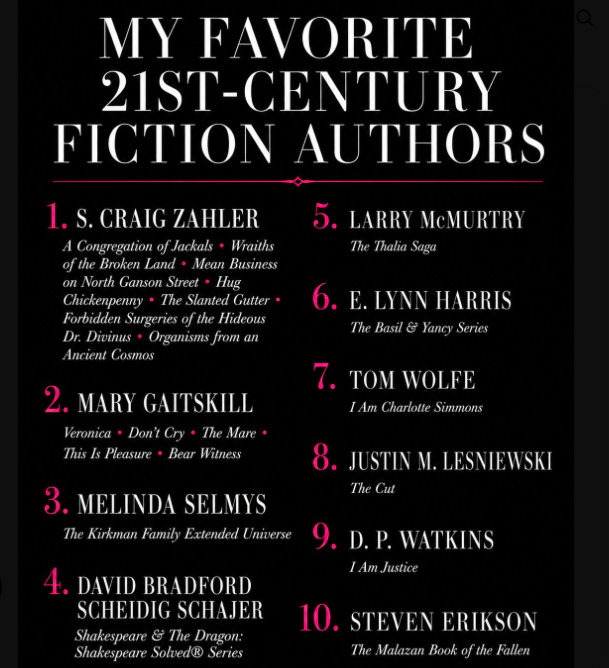
He even put me on his list of top fiction authors of the 21st Century:
Here I want to share with you, on one page, Demetry’s criticism of these books.
I think it will be helpful to read this, to hear from an unusually knowledgeable bardolator who has read both books, and who sees the big picture that I am trying to create.
As you will see, he has already figured out some things that I plan to reveal later on in the series of novels.
“This is the definitive historical fiction about Shakespeare!”
“Dive deeper into the miracle of Shakespeare with these extraordinary and entertaining historical novels—and celebrate America’s secret forefather. The books are mind-changingly great and a lot of fun!!”
“One can’t know how I’ve waited for someone to get this right ever since the movie Shakespeare in Love reductively portrayed William Shakespeare.”
Review of Shakespeare & The Dragon Volume 1:
Shakespeare, Now More Than Ever
In Volume 2 of Shakespeare & The Dragon: Shakespeare Solved® Series, David Schajer explains how a young William Shakespeare reads the books in which he immerses himself:
“With every book he read, he found himself stepping into the minds of the figures in the book.”
Then Schajer, as he often does, doubles down on the significance of this insight: “Their thoughts became his thoughts.”
Schajer’s reiterations form part of the pleasure of the books’ syntactical rhythms, driving ever deeper with bracing clarity.
Although Volume 1 of this historical-fiction series ends before Shakespeare puts quill to paper to draft one of his titanic plays, Schajer unites his own mind and the reader’s to Shakespeare’s as he develops the knowledge, experience, and impetus for his art.
Shakespeare lives in a world of monumental change: the age of exploration, empire, and discovery of the New World; the crest of the Enlightenment’s recrudescence of Classical philosophy and art; and the Protestant Reformation, which reshapes the world. Shakespeare finds himself at the center of a tempest as the person best equipped to unify these revolutions in human consciousness into a popular body of work.
Schajer opens the book with the perfect metaphor for Shakespeare’s mission: a dream-memory of a miraculous star—a divine lodestar—before a maelstrom pulls him under.
Chapter 2 transitions from Shakespeare’s contemplation of his recurring nightmare’s significance to the dream of a young Earl of Essex, then Chapter 4 shifts to a doomed Mary, Queen of Scots, who no longer dreams.
By alternating perspective between Shakespeare and other figures of the age connected to Queen Elizabeth I’s efforts to maintain power, Schajer plumbs the characters’ subconscious through articulation of their conscious thought.
Although stylistically and cumulatively different, Henry James similarly focuses on individual thought processes, analyses of events, and determinations to create further actions, while the incidents themselves occur “offstage.”
In this way, Schajer reveals not only the development of Shakespeare’s imagination—the vernacular life from which he drew, a concept reduced to “in-jokes” by Shakespeare in Love. He also shows Shakespeare’s insight into the audience he needs to reach.
Schajer achieves this at the blessed expense of setting description except when needed to serve thematic richness.
He demonstrates the principle during Mary’s execution, a grotesque guignol with Elizabeth’s counselors and local witnesses serving as spectators.
To such folk, Shakespeare will serve his dramas with animal bladders filled with gore.
By understanding the gruesome imaginations of his audience and the pressures of the age upon them—the needs he addressed—Schajer’s Shakespeare leaves little doubt that one man authored Titus Andronicus, Macbeth, Hamlet, King Lear, the Henriad, A Midsummer Night’s Dream, and The Tempest. This man.
Schajer reintroduces Shakespeare’s project and, in the face of academic assault, ideologically driven restagings, libelous biographies, and revisionist historical fiction (like the anti-religious, anti-art lies of Hamnet), affirms the singular man and purpose.
With Olympian perspective into the minds of myriad characters who shaped history, Schajer’s articulation reveals his own personality and purpose.
He returns Shakespeare as a deposit for future generations—this generation—born of the Bard’s era and in need of his guidance through turbulent times.
Review for Shakespeare & The Dragon Volume 2:
Shakespeare’s Camelot: The Theater of Utopian Imagination
Shakespeare & The Dragon: Shakespeare Solved® Series, Volume 2 by David Bradford Scheidig Schajer
David B. Schajer’s Shakespeare & The Dragon: Shakespeare Solved® Series reshapes the reader’s mind alongside Shakespeare’s.
It not only offers a new paradigm for appreciating Shakespeare’s works but also readjusts perspective on the history that forms social and political identity.
It reaffirms civic responsibility and points to Shakespeare as a guide for fulfilling it.
All this, before William starts writing a single play.
In this volume, Schajer chronicles Shakespeare’s still-uncultivated gifts for writing and acting as historical figures.
Alongside those gifts, Shakespeare gains an understanding of how Queen Elizabeth I’s seemingly distant royal court affects his family’s fortunes.
Events stemming from that court prompt his heroic decision to move alone to London and pursue his theatrical dream.
The narrative alternates these episodes from Shakespeare’s life with Elizabethan intrigues that carry consequences for his family, everyone in England, and a powder keg of global affairs.
Through an account of monarchical and imperial systems charged with the excitement of high melodrama, soap opera, and Shakespearean drama, Schajer supplies a key to the wisdom of Shakespeare’s works and the intentions behind them.
A chapter of overwhelming romanticism—a crystalline description of love—traces Romeo and Juliet’s star-crossed plight to a relationship that Elizabeth I forbids through her arbitrary micromanagement of the court and aristocracy, of the human heart.
After finishing the book, I treated myself to a Stratford Festival recording of Shakespeare’s King John, which Schajer recommended on X.
Thanks to Shakespeare Solved, Shakespeare’s insights into monarchy’s comic absurdity gained clarity.
The drama also turns heartbreaking as we witness the fate of young Arthur of Brittany, who contests John’s legitimacy, and the disillusionment of Sir Richard Plantagenet.
John welcomes this bastard son of Richard the Lionheart into his court as part of his consolidation of power.
Shakespeare Solved tells the story that the Hamnet film’s revisionism fears to acknowledge.
Through his art, the Shakespeare whom Schajer unveils bequeaths the liberation and responsibility of freedom.
The connection Schajer draws between Hamlet and King Arthur alone justifies the price of admission.
His revelation of Shakespeare’s utopian imagination blooms in the mind.